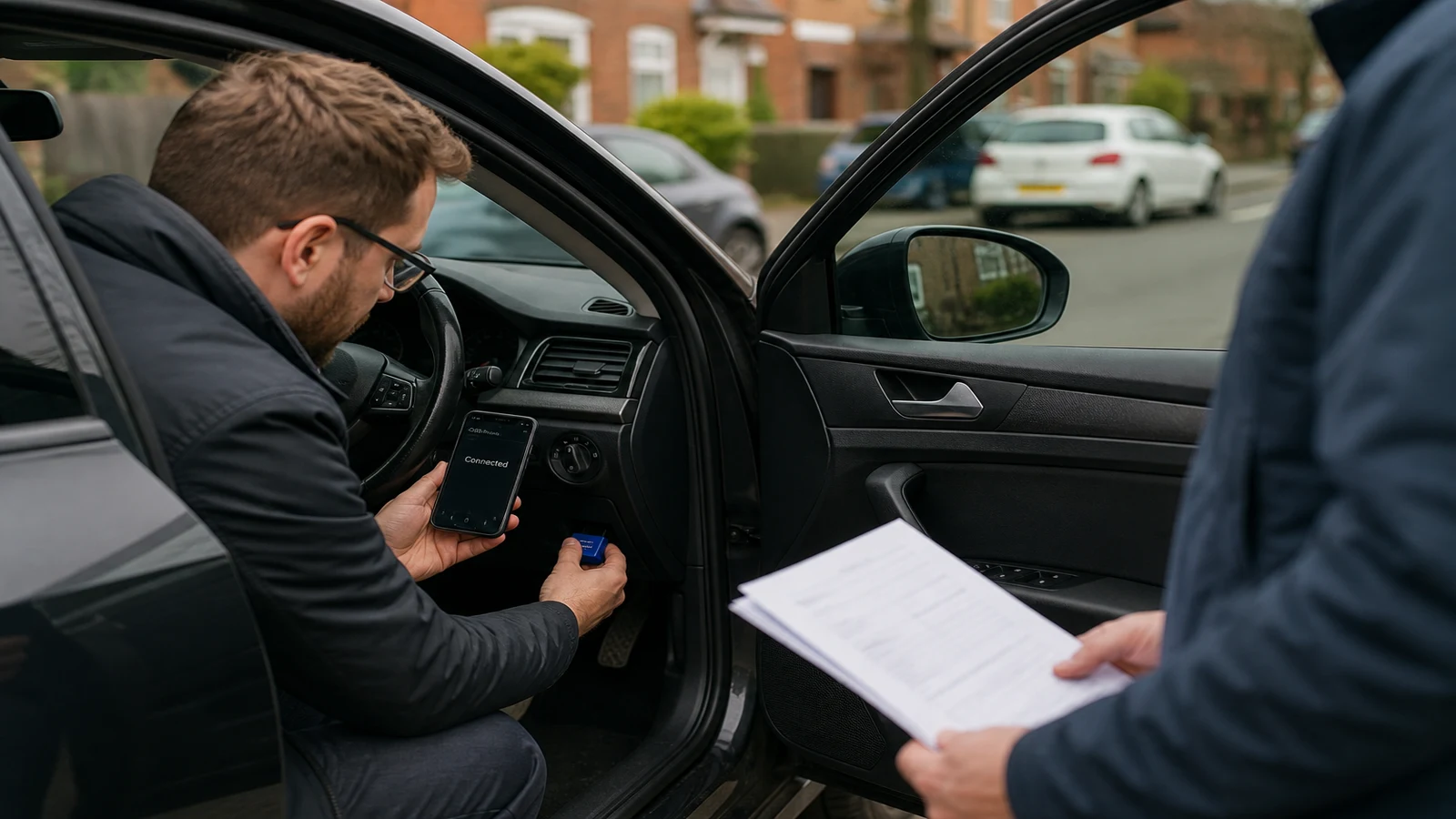
How to Check a Used Car With an OBD2 Scanner Before Buying in the UK
Short answer: plug-in scanning can help you spot stored fault codes, warning-light clues, and readiness issues, but it should only be one part of a used-car check. It cannot prove a car is sound, accident-free, or fairly priced.
A home OBD2 scanner is best treated as a way to ask better questions, not as proof that one named part has failed.
What to scan before a test drive
Diagnostic trouble codes point to a system or condition. They do not automatically identify the failed part, and replacing parts from one code can waste money.
Codes, pending codes, and warning lights
Pending codes, freeze-frame data, live data and readiness monitors can add context. A basic scanner may read engine codes well but have limited coverage for ABS, SRS, steering or manufacturer-specific systems.
Why a clear scan is not a clean bill of health
For a used-car check, a clear scan is useful but incomplete. Warning lights, recent resets, incomplete readiness monitors and service history all matter before buying.
Questions to ask the seller
Service resets and battery registration should follow real maintenance or a correct battery replacement. Clearing a light without doing the work can hide a problem temporarily.
When to arrange an independent inspection
Steering, braking, emissions and AdBlue faults deserve careful diagnosis. Do not clear warnings just to see whether they come back before understanding the fault.
Quick buying checklist
- Read stored and pending codes.
- Look for freeze-frame or live-data context if available.
- Check readiness monitor status before used-car decisions.
- Do maintenance before resetting service reminders.
- Use a garage for safety or emissions faults.
FAQ
Is this a job for a beginner?
Basic reading and inspection can be suitable for careful owners, but repeated faults, high-current wiring, warning lights or unfamiliar systems need professional diagnosis.
What should I check before buying a tool or accessory?
Check the product instructions, the job you actually need to do, and whether the item matches your vehicle, appliance, clothing use, garden system, brew-day setup or burner arrangement. If the fit or rating is unclear, pause rather than guessing.
Final buying advice
A scanner is valuable when it slows down guesswork. Use it to document symptoms and decide the next safe diagnostic step.